Feeling confused about what to eat?
Imagine waking up with the sun and spending the day hunting, gathering, and preparing food. Imagine the beauty of a fresh garden, a cellar full of fermented foods, and a happy cow grazing nearby. There was a time when there were no doubts about what to eat. Today, unfortunately, that's not the case.
Between social media and supermarket aisles, confusion reigns supreme: plant-based diets will save the world, keto cures cancer, grapefruit juice cleans arteries. You're not alone in this confusion. Food can fuel your heart or destroy it.
What does "Healthy" really mean?
A 2017 survey found that most people have no idea. Many respondents claimed to be healthy simply because they had no diagnosed conditions, despite being overweight.
Why is there so much confusion?
- Conflicts of interest: The food industry funds studies. A striking example is Coca-Cola, which funded $5.5 million to those claiming exercise was more important than diet for weight loss.
- From "diet" culture to "health" culture: In the '80s, there was the low-fat myth. Today, marketing has shifted to terms like "keto-friendly" or "gluten-free." But processed food remains harmful, regardless of the label.
- Global food access: Our ancestors ate local and seasonal food. Today we have access to tropical fruit year-round. Although nutritious, these foods might not be what our body needs in a given climate or season.
The Truth: In 440 BC, Hippocrates declared: "Let food be thy medicine." Food can and should be your medicine. Ultra-processed food is nothing but carefully packaged poison.
Macronutrient Strategy
- Proteins: Choose organic grass-fed meats like beef, lamb, poultry, and organic eggs. Grass-fed animal sources have a much more balanced Omega-6/Omega-3 ratio (close to 1:1 or 2:1), higher levels of CLA (Conjugated Linoleic Acid), and greater concentrations of fat-soluble vitamins (A, E) and antioxidants.
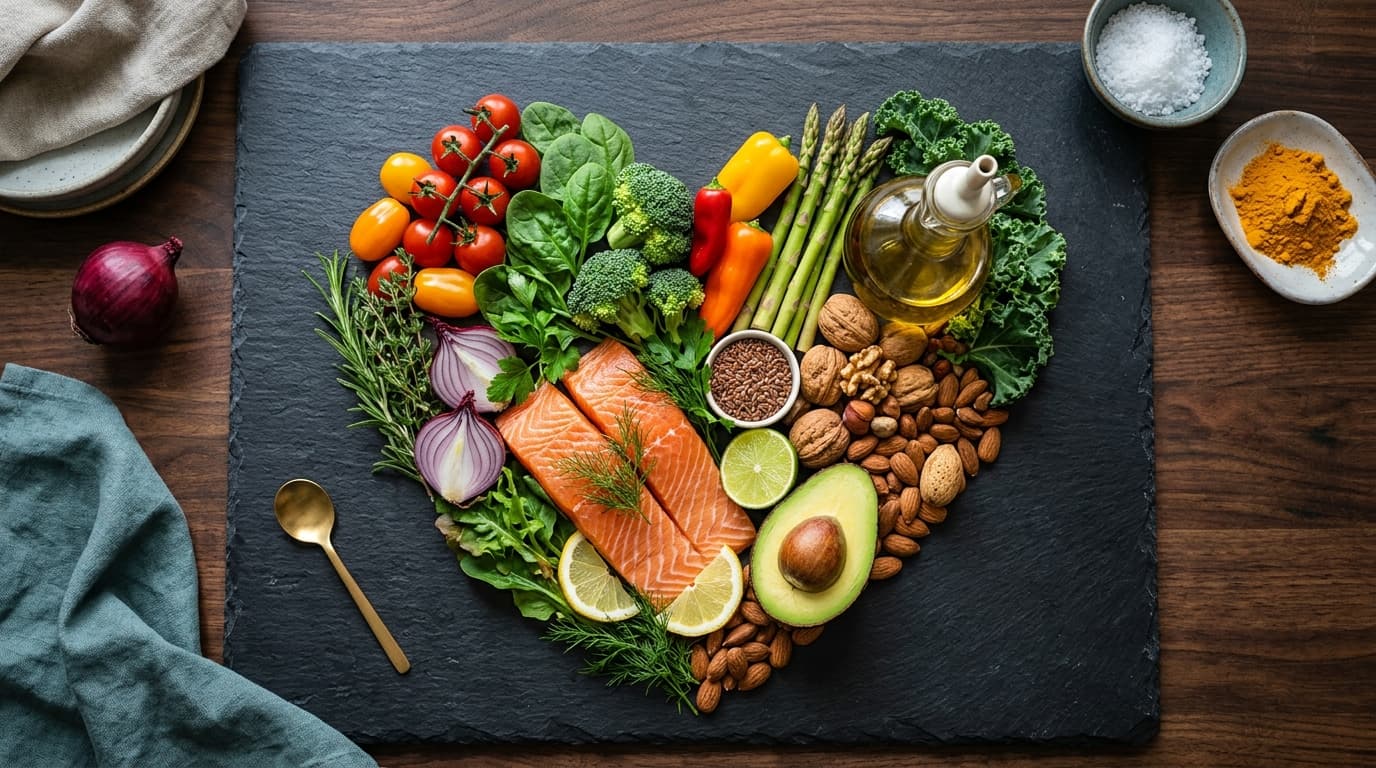
- Fats: Prioritize olive oil, nuts (walnuts, almonds, macadamia, hazelnuts), avocado, and coconut.
- Carbohydrates: Focus on organic non-starchy vegetables (leafy greens, cruciferous) and limit seasonal fruit. Prefer whole grains (Oats, Whole Barley, Black and Red Rice, Rye, Buckwheat).
Core Principles
- Eat organic, whole foods.
- Use traditional healthy fats (olive, coconut, or seed oils).
- Harness the power of organic spices.
- Avoid processed "food-like products" in cans or packages.
- Limit dairy. If consumed, ensure it's organic, raw, and from grass-fed animals.
- Eliminate refined sugar and sugar-loaded products.
Tips for Reading Food Labels
Mastering food labels
- Ingredient order: They are listed in descending order of quantity. The first five ingredients generally make up most of the product.
- Chemical substitutes: "Sugar-free" labels often mean chemicals like aspartame have replaced sugar, bringing other health problems.
Don't be fooled by the front
While nutritional values and ingredient lists must remain factual, manufacturers can put false health claims on the front of packaging that mislead consumers.
Misleading terms on food labels
- Whole grain: May simply indicate that whole grains are present, not that all grains used are actually whole.
- Made with real fruit: This claim is unregulated.
- Natural: Not a regulated term. Manufacturers can put "natural" on anything.
- Multi-grain: Simply means multiple types of refined grains are present.
- Sugar-free: Simply means common sugar has been replaced by artificial sweeteners.
- No sugar added: Says nothing about natural sugars and carbohydrates already present.
- "Light" products: Just means they contain less of a certain ingredient compared to average.
- Low-carb: Means nothing and can be used on any product.
Look for Sugar
Companies love to hide sugar under one of its many aliases. Did you know there are at least 46 names for sugar? Here are the most common ones:
- Sugar / Sucrose – The most common overall.
- High fructose corn syrup – Ubiquitous in American products.
- Dextrose – Widely used in baked goods and cured meats.
- Maltodextrin – Also used as a thickener.
- Glucose – Base for many industrial syrups.
- Fructose – Often added to increase sweetening power.
- Cane sugar – Often used in "premium" products.
- Honey – Often used for marketing purposes.
- Agave – Very popular in "health-conscious" or vegan products.
- Coconut sugar – Rising strongly in the organic sector.
- Fruit juice concentrate – Used to write "no added sugars" while being concentrated sugar.
Fewer ingredients is better
As a general rule, try to stick to foods with five ingredients or fewer. These ingredients should all be things you can pronounce and understand.
How Cooking Affects Food
Stir-frying
Pour a drizzle of heart-healthy oil with a high smoke point, such as avocado oil, ghee, or coconut oil into the pan; add fresh vegetables and your preferred protein. Oils with a low smoke point, like olive oil, should not be used for high-temperature cooking. Reserve these oils for raw dressings.
Roasting and baking
Roasting and baking preserve water-soluble nutrients better than boiling. Baking can increase the bioavailability of certain compounds, such as lycopene in tomatoes or beta-carotene in carrots.
Boiling, poaching, and simmering
Cooking food in water leads to significant nutrient loss. Water-soluble vitamins like C and B can quickly disperse into the water. The good news is these nutrients remain in the water: save it and add it to a sauce or soup.
Steaming
Steaming is the method of choice for preserving heat-sensitive phytochemicals and glucosinolates. To maximize carotenoid bioavailability, it's essential to add a source of healthy fats, like olive oil, after cooking.
Grilling
Cooking meat at high temperatures generates two types of potentially carcinogenic compounds: Heterocyclic Amines (HCAs) and Polycyclic Aromatic Hydrocarbons (PAHs). For caution: keep grilling times short, avoid charring, and marinate meat with herbs (rosemary, thyme) or acids (lemon, vinegar) for at least 30 minutes – this can reduce HCA formation by up to 90%.
Frying
Fast food fried foods are loaded with seed oils and harmful byproducts. However, you can fry at home with quality high smoke point oils like lard, tallow, avocado oil, ghee, or coconut oil. Always choose fat sources from grass-fed animals.
Pressure cooking and Slow Cooking
Pressure cooking reduces heat exposure time, minimizing the degradation of heat-sensitive vitamins. Slow cooking promotes the digestibility of connective tissues. In both cases, consuming the cooking liquid is essential to recover dispersed minerals and water-soluble vitamins.
Microwave
The microwave can preserve water-soluble vitamins better than boiling. Warning: Reheating food in plastic containers can cause migration of endocrine disruptors like Phthalates and Bisphenol A (BPA). Use glass or ceramic exclusively.
Quick tips for food preparation
- Don't peel vegetables: just clean them with water and a brush.
- Leave the fat on meat: it's good for your health.
- Avoid overcooking food.
- Always save the cooking water from vegetables.
- Cook with little water.
- Eat plenty of raw vegetables to balance cooked foods.
Some foods respond better to specific methods: tomatoes are better cooked (heat increases lycopene levels), while kale is better raw to preserve water-soluble vitamins.
"What" beats "How"
Remember: how you cook food matters, but what you choose to eat matters even more. If you eat nutrient-rich, minimally processed foods, you're on the right track.
IFIC Foundation (2017): Food and Health Survey
O'Connor, A. / GEBN (2015): Coca-Cola Funds Scientists Who Shift Blame for Obesity Away from Bad Diets. The New York Times
Daley, C. A., et al. (2010): A review of fatty acid profiles and antioxidant content in grass-fed and grain-fed beef.Nutrition Journal
U.S. Food and Drug Administration (FDA): Food Labeling Guide
SugarScience, UCSF
Sugimura, T., et al. (2004): Heterocyclic amines: Mutagens and carcinogens in cooked meat. Cancer Science
Smith, J. S., et al. (2008): Effect of marinades on the formation of heterocyclic amines in grilled beef. Journal of Food Science
Santos, C. S., et al. (2013): Effect of cooking on olive oil quality: A review. Food Research International
Dewanto, V., et al. (2002): Thermal processing enhances the nutritional value of tomatoes by increasing bioaccessible lycopene. Journal of Agricultural and Food Chemistry
Muncke, J. (2011): Endocrine disrupting chemicals from plastic food containers. Science of The Total Environment